- Home
- Darshan & Aarti
Darshan, Aarti & the Daily Rhythm of Worship
From the first conch at dawn to the lullaby of shayan aarti, the day at Jeen Mata Temple follows a rhythm that has been kept for generations.
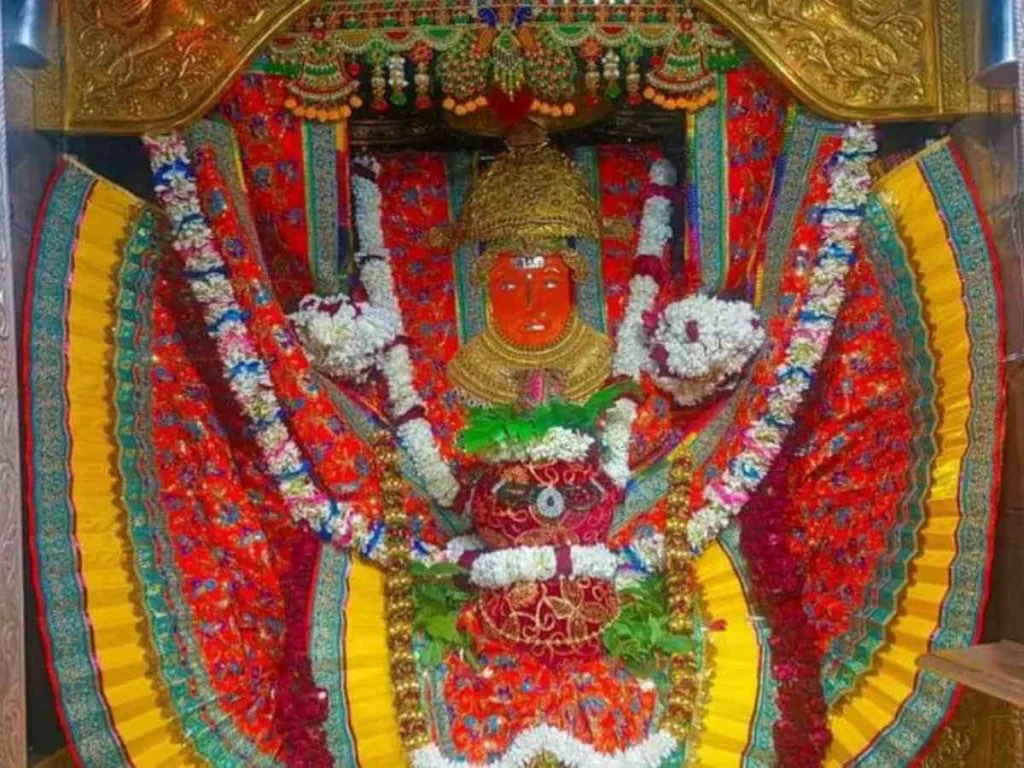
The daily aarti schedule
Timings change with the season (earlier in summer, later in winter) and are extended during Navratri and on special days. Treat the times below as a guide and confirm locally before travelling for a specific aarti.
| Ritual | Approx. time | What happens |
|---|---|---|
| Mangla Aarti | Around 5:00 – 5:30 AM | The temple doors open and the Goddess is "woken" with conch, bells and lamps. Many devotees consider this the most auspicious darshan of the day. |
| Shringar Darshan | Around 7:30 – 8:30 AM | After the morning bath (snan), the Goddess is dressed in fresh poshak, ornaments and garlands. The new shringar is revealed to devotees. |
| Bhog Aarti | Around midday | Food offerings (bhog) are presented. Some shrines draw a curtain briefly during bhog, so darshan may pause for a short time. |
| Sandhya Aarti | Around sunset | The grand evening aarti with drums, bells and large lamps. The mandap fills with devotees singing the Goddess's aarti together. |
| Shayan Aarti | Around 9:00 – 10:00 PM | The final aarti of the day, when the Goddess is put to rest. Darshan then closes until the next morning's mangla. |
Taking darshan, step by step
The process is simple, and knowing it in advance lets you stay focused on the moment of darshan itself.
Prepare
Bathe and dress modestly. Buy your offerings (coconut, chunari, flowers, prasad) at the stalls on the approach road.
Enter
Leave footwear at the stand, bow at the gateway and join the queue gallery leading towards the mandap.
Offer
At the sanctum threshold, hand your offerings to the pujari, join your palms and take darshan of Jeen Mata.
Receive
Accept prasad and the Goddess's blessing, then visit the subsidiary shrines and, if you can, Harsh Bhairav.
How devotees honour the Goddess
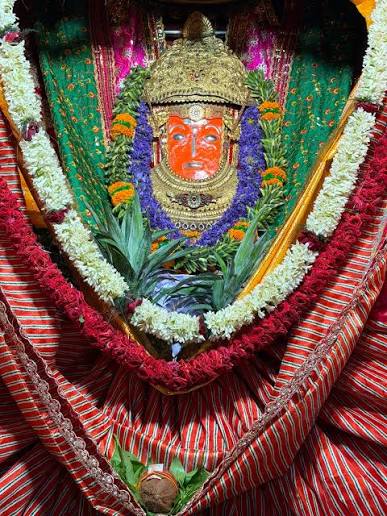
Shringar, the daily adornment of the deity, is an act of love as much as ritual. Each morning the pujaris dress Jeen Mata in fresh garments and ornaments. The flowers are chosen by season: marigolds in winter, roses all year, jasmine and tuberose in the warmer months. The photograph here shows a morning shringar with deep purple and white garlands, fresh green leaves at the Goddess's feet, and a striped red poshak.
Devotees take part through their offerings. Each one has its own meaning in the Shakta tradition:
Chunari
A red or patterned veil-cloth, offered as one would gift a beloved daughter. It is the most typical offering at Rajasthan's Devi shrines.
Nariyal (coconut)
Stands for the ego broken open before the Goddess. Coconut pieces come back as prasad.
Shringar samagri
Bangles, bindi, sindoor and mehndi: the marks of a married woman, offered to the Mother as Saubhagya-dayini, giver of good fortune.
Prasad
Sweets such as laddoos, makhane and dry-fruit mixes, offered and then shared as the Goddess's blessing.
Jadula / mundan
A child's first haircut, offered to the kuldevi. It is one of the most important family rites performed here.
Silver chhatra
Small silver umbrellas, eyes or ornaments, often offered by families when a vow (mannat) has been fulfilled.
Families planning a mundan or other ceremony should arrive early, especially in Navratri, and speak with the temple staff about the customary procedure and timings on the day.
A verse for the Mother
सर्वमङ्गलमाङ्गल्ये शिवे सर्वार्थसाधिके।
शरण्ये त्र्यम्बके गौरि नारायणि नमोऽस्तु ते॥
"O auspiciousness of all that is auspicious, O benevolent one who fulfils every aim, O refuge of all, three-eyed Gauri, Narayani, salutations to you." This shloka from the Devi Mahatmya is one of the most widely recited prayers to the Goddess. Many devotees chant it softly while waiting in the queue for darshan.
Darshan questions, answered
Is there an entry fee for Jeen Mata Temple?
No. Darshan at Shri Jeen Mata Temple is open to all devotees without an entry fee. Offerings and donations are voluntary.
What is the best time of day for darshan?
Early morning, around mangla aarti and shringar darshan, is usually calmer and especially auspicious. Evenings are livelier with the sandhya aarti. Weekends, holidays and Navratri bring the heaviest crowds.
How long does darshan take?
On an ordinary weekday darshan may take from a few minutes to under an hour. During Navratri and on major festival days, waiting times can stretch to several hours, so plan with patience and carry water.
Can I photograph the Goddess?
Photography rules can change. Always follow the signs and instructions of temple staff, and do not photograph the sanctum where it is not allowed.
Can we perform a mundan (first haircut) ceremony at the temple?
Yes. Jadula or mundan is a long-standing tradition at Jeen Mata, especially for families who regard her as their kuldevi. Arrive early and check the procedure with temple staff on the day.
Do I need to visit Harsh Bhairav as well?
It is not compulsory, but tradition strongly encourages it. Many devotees feel their pilgrimage is complete only after honouring Harsh Bhairav, Jeen Mata's devoted brother, on the nearby hill.
Experience the Navratri mela
Twice a year darshan becomes a festival of lakhs. Learn what to expect during Chaitra and Ashwin Navratri at Jeen Mata.